


Twelpforce & FanWoody: How Best Buy & TGI Friday are Building Facebook & Twitter Brands on TV

12

Picture 1A couple of weeks ago, I blogged about Best Buy’s television commercials advertising their Twelpforce, a group of Best Buy’s   technology experts who offer technical advice and support via Twitter. The most interesting thing about these commercials was that they weren’t directing visitors to their website, something which they control. Instead, they were directing people to the Twelpforce Twitter page, which is owned by Twitter.

While I don’t think there are going to be problems with Twitter, I just don’t think it’s a smart move to build the Twitter traffic rather than traffic to the main Best Buy site. They could conceivably redirect traffic from BestBuy.com/twelpforce to the Twitter page if they wanted to do so, allowing them to control the traffic and analytics rather than a third party.

Recently, I’ve been seeing commercials from TGI Fridays, encouraging people to go to a Facebook page they set up, Facebook.com/fanwoody. The commercial says that if 500,000 become Woody’s Fan, all will receive a coupon for a free burger at a TGI Fridays restaurant. The TGIF fan page has over 497,000 fans right now, and at the rate it seems to be going, they will hit the half a million mark in the next couple of hours.

Like Best Buy is doing with Twitter, TGI Fridays is driving traffic to Facebook rather than their home page. I still don’t understand or like the logic behind building another company’s brand.
Ensure Your Site is Indexed in Google

Yesterday, I blogged about the smart thinking of Melanie Oudin’s family, which registered MelanieOudin.com a couple of years ago. With Melanie competing in the quarter finals of the US Open tennis tournament, she is winning over new fans and becoming a highly searched topic. Her website is operational and is run on WordPress, which Google and other search engines generally love – as blogs typically lead to fresh content.

I was surprised to see that MelanieOudin.com did not rank in the top 100 Google results on a “Melanie Oudin” search. Almost without fail, Google will rank the developed keyword .com domain name fairly well on a search for the exact keyword phrase. I then checked to see if the website was even listed in Google at all by searching for MelanieOudin.com directly. It was then that I found the culprit for its omission from the top 100 results – the site isn’t indexed in Google.

Whether the site isn’t ranking because it’s new (not sure) or whether Google penalized it for some reason, now would be the best time for it to be listed among the results, as “Melanie Oudin” is one of the top searches right now on Google, Yahoo, Twitter…etc. If the site was indexed, it would almost certainly receive more traffic, which could lead to bigger things such as endorsement deals and sponsorships.

There is something Melanie Oudin’s family can do to ensure the website is indexed in Google. In fact, I recommend that all website owners do an exact search for their domain name, and if it’s not listed among the results, they should think about filing a Google Reconsideration Request (requires a free Google account). This will tell Google that you have a legitimate website, and that Google should reconsider listing it. Since Google generally lists all websites they can find (based on links to it which do exist), they frequently have a reason for omitting a website.

Requesting reconsideration can get your website indexed in Google quickly, and it’s a smart thing to do, especially when there are a lot of people searching for you or your keywords.

Miami Dolphins Not Using Dolphins.com

MiamiDolphins.comA few weeks ago, I reported on the Miami Dolphins UDRP filing for the domain name Dolphins.com. After a short period of time, the UDRP was suspended, and the Whois information changed, showing the National Football League as the new owner of the domain name. I assumed that the team wanted to use the domain name for their website, rather than their current MiamiDolphins.com domain name.

With the football season set to kick off this coming week, and the Miami Dolphins scheduled to play the Atlanta Falcons on September 13, one would anticipate that now would be a time that Dolphins.com gets considerable type-in traffic. People are looking for rosters, stats, team schedule, tickets, collectibles…etc. Rather than forwarding the domain name to the current website to capture the traffic, the domain name is not resolving – a big mistake. I don’t believe they would have anything to lose whatsoever by forwarding the domain name to the current website.

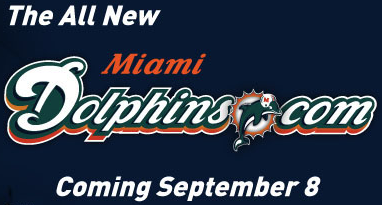
At the moment, there is a splash page on MiamiDolphins.com that says “the all new Miami Dolphins.com Coming September 8.” Because of the graphic, I can’t tell if they are planning to change the primary url to Dolphins.com or to keep it the same, but I sure hope they decide to use Dolphins.com instead of having it not resolve.

Don’t Fear 65 .com – Call to Action Gone Wrong

Picture 2I think the domain name DontFear65.com is clever, but the call to action banner is poor execution (in my humble opinion). In the United States and perhaps elsewhere, 65 is the typical age at which many people aim to retire, and certain tax benefits are given. Symetra Financial is trying to convey that retirement isn’t something that potential customers need to fear.

The problem is that I saw this banner advertisement on a website I visit frequently, but for short periods of time, so it barely caught my attention. As I was clicking to another website, I glanced up at the huge 728×90 banner, and I read, “Don’t fear 65.com,” with the 65.com standing out the most. My first reaction was that it was cool a 2 digit numeric website was being advertised, and my second reaction was to type in 65.com, which didn’t resolve to any website.

I thought it was weird, so I went back to the site where I saw the banner and realized they were advertising DontFear65.com rather than 65.com. Although I am not a potential customer nor part of their target audience, my opinion doesn’t matter; however, there are probably people who thought the same thing, and they are sending traffic to 65.com.

The problem with call to action domain names is that they sometimes tell people to take action on other domain names. In my opinion, the worst offenders are CVBs (Convention & Visitors’ Bureaus) who were often so late to the party they had to settle with CTA domain names, such as VisitXYZ.com rather than XYZ,com. Many are also so full of themselves, they are unwilling to work with the owner of the XYZ .com domain name since they feel its their job to bring visitors to the area, rather than a team effort.

Call to action domain names aren’t so bad when they’re found in text links, but put them on a banner or billboard, and space the words apart, and you end up with a nice call to action for the other domain name. At best you lose traffic, and at worst you are building your competitors’ brand and traffic.

ESPN Goes Local; Gets Domain Names

ESPNI read that ESPN is going local in a variety of sports markets, and I noticed that they bought many of the domain names they will need to expand their online presence and protect the brand.   ESPN first went local in Chicago in April, and is known locally as ESPN Chicago, and they are planning to enter the Boston market in September. Assuming they find success, they will presumably continue to expand locally, in addition to radio stations they own in many large markets.

Although the network uses the ESPN.com URL for its Chicago site, they forward ESPNChicago.com to that preferred URL: ESPN.Go.com/Chicago. They also own many other domain names for markets in which they may have expansion plans. Some of the local domain names were purchased many years prior as part of the local ESPN radio network, while others have been purchased more recently. I did a quick scan of some of the bigger sports markets, and it looks like ESPN was on top of their domain registrations before making their announcement.

ESPNBoston.com – Registered 2005
ESPNChicago.com – Registered 1999
ESPNNewYork.com – Registered 2007
ESPNSeattle.com – Registered 2008
ESPNDallas.com – Registered 2007
ESPNDenver.com – Registered 2006
ESPNPhiladelphia.com – Registered 2009
ESPNMiami.com – Registered 2008 – Not owned by ESPN
ESPNNewOrleans.com – Registered 2009 – Not owned by ESPN
ESPNLosAngeles.com – Registered 2009
ESPNDenver.com – Registered 2006
ESPNDetroit.com – Registered 2007
ESPNSanFrancisco.com – Registered 2009
ESPNStLouis.com – Registered 2008
ESPNTampa.com – Registered 2009
Many more…

This is a credit to ESPN’s marketing smarts, because I have seen other companies decide that they are only going to use their primary URL and not worry about the local URLs. Unfortunately, when human nature takes over and people type-in what they assume will be the URL, they come across a domain name that isn’t owned by the company. In the end, the company ends up spending thousands of dollars purchasing the domain names from their cybersquatting owners, or they spend even more money on UDRP filings and other litigation.

Buying these domain names for $10/each now could save thousands of dollars in the future. Even if they don’t expand in all of those markets, they are still protecting the brand at a relatively low cost.

Defensive Domain Registration Advice

Many companies defensively purchase typos and alternative extensions to prevent others from owning them. Defensive domain name registrations aren’t simply for brand protection though. They can also be done to ensure a company prevents another similar company from entering a newly created industry or niche using the type of product as the company’s brand or website.

I spent a couple of hours at the New York International Gift Fair today, and among the hundreds of exhibitors, I saw a company that had a new type of product. This unique gift item may or not be a hit, but it certainly is a one of a kind product that can and will be knocked off by others. The .com of the product type is currently sitting unregistered, available for anyone to register for under $10.

While this product is not similar to door knockers, I will use   door knockers as an example. A few years ago, I saw a guy selling unique metal door knockers at the show. I forgot what they guy’s company was called, but when I was looking it up a few months ago for a friend, I was curious to find out who owned DoorKnockers.com. You probably guessed it… the guy who I saw at the show owns it. Smart guy.

Now back to this new product. I left the show intrigued about the product, but we weren’t convinced to buy it (for my parents’ business). We stopped by dozens of booths, so they are all blending together right now.   I Googled it, but the problem is the guy took a very common utilitarian product (hundreds of thousands of Google results), and he made it completely unique. Because of this, I can’t find his company when searching for the term.

I get that many companies want to have a unique brand rather than a generic industry term for the company name, but even if he simply registered this product .com name, he could at least prevent others from knocking his product off and owning the space online.

The takeaway here is that if you develop your own special type of product and the .com is available, register it. Even if you don’t want to set up a website, at least you can forward that to your brand’s website and prevent someone else from buying it.