Home Blog Page 478

Daily Poll: Are One Word .coms “Brandable” Domain Names?

I wrote about this in the past, but I am curious to know whether people consider one word .com domain names to be considered “brandable.” In the past, I considered made up terms and words to be brandable domain names. The thinking was that someone could build a unique brand name on a made up term. On the other hand, one word .com domain names can become a brand and might be considered “brandable” domain names.

For today’s daily poll, I would be interested to know whether readers consider one word .com domain names as “brandable” domain names.


Playboy Going After Centerfold Domain Names (Updated)

It looks like Playboy Enterprises is going after a few domain names with the word “centerfolds” in them. The company filed three separate UDRPs at the World Intellectual Property Organizations to try and wrest control of the following three domain names:

Centerfolds.com (WIPO case #D2018-1457)
PlayboyCenterfold.com (WIPO case #D2018-1455)
PlayboyCenterfolds.com (WIPO case #D2018-1456)

I would imagine the company will have a pretty decent shot at winning the later two UDRP cases considering they have the “Playboy” brand name in them. Obviously there could be mitigating circumstances, but PlayboyCenterfolds.com was just registered in April of this year and PlayboyCenterfold.com currently seems to utilize a zero click parking lander that seems to forward traffic elsewhere.

The UDRP for the Centerfolds.com domain name will be interesting. Whois records show that this domain name was created back in 1995, making it over 23 years old. When I tried to see how Centerfolds.com is being used, the domain name did not resolve for me.

The singular Centerfold.com domain name is owned by Playboy. It does not appear to be resolving for me, and a check on DownForEveryoneOrJustMe.com confirms that it is down.
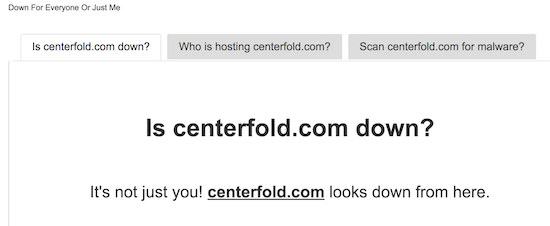
According to Wikipedia, the centerfold “term was coined by Hugh Hefner, founder of Playboy magazine.” From what I can see using the USPTO TESS search, there are


Add LinkedIn Profile Link to Inquiry Page

I want to share a suggestion I have not had the time to implement on my own but plan to put into place at some point in the near future. It might be a good idea to add a link to my LinkedIn profile on my domain name for sale inquiry and offer landing pages.

There are two reasons for why I think this is a good idea and why I want to test this out.

Tracking who is landing on your landing pages. There are many inquiries made covertly, and if you are able to see that a specific person at a specific company landed on the inquiry page and you receive an anonymous inquiry a short time later, it can help identify who wants to buy the domain name. Even if an inquiry is not made, you may be able to get a better idea about who is looking at one of your domain names.

People may trust you more when they inquire. The domain name business is notoriously opaque. People don’t necessarily know who they are dealing with when buying a domain name. Someone unfamiliar with the domain space may not trust doing a deal with someone anonymous. Putting a link to your LinkedIn profile can humanize you and help establish a level of trust and rapport when someone wants to know who owns the domain name.

Daily Poll: Where Do You Primarily Buy Domains?

I buy domain names in just about every way possible with the exception of forums. I buy my best inventory privately, but I would say I primarily focus on domain auctions to bolster my inventory.

Where do you primarily buy your domain names (ie where do you mostly buy domain names):


Determining the Viability of Non-English Domain Names

I regularly see non-English .com domain names coming up for sale at auction. I took Spanish for a few years in high school, but my foreign language skills are quite atrocious. That being said, because there may be value in non-English .com domain names, it is important to know how viable a name is before bidding on it or agreeing to buy it.

The first thing I do is a Google translate search to see if the word or phrase makes sense. The term or keyword may seem familiar, but if the spelling is off, it might not be worth anything. Even if the spelling makes sense and the word or term means something, it might be uncommonly used, leaving it with little commercial value. A general Google search with the word or a quoted search for the phrase can generally show me whether this is a popular term or not.

One of the best ways to tell if the keyword or term is popular or commonly used is to search for it in the

Daily Poll: Do You Own .IO Domain Names?

Morgan Linton recently wrote about .IO domain names being purchased by domain investors. ccTLD domain name extensions like .IO aren’t really in my wheelhouse and I don’t own any nor have I ever owned any.

Based on what Morgan wrote and what I have seen in sales reports for the last couple/few years, domain investors have been buying .IO domain names. I have also seen many startups use .IO domain names for their websites, and this adoption is likely fueling the interest in the extension.

For today’s daily poll, I would be curious to know how many readers own .IO domain names. I also added a couple of other options for people who previously owned .IO domain names or plan to buy .IO domain names in the future.


