Watch gTLD Senate Hearing Live at 11am

2

For those who are interested, you can watch the United States Senate’s Commerce, Science & Transportation Committee hearing on the new gTLD program, which begins today at 11am EST. The hearing will be broadcast live on the Senate.gov website.

According to the US Senate website, “This hearing will examine the merits and implications of this new program and ICANN’s continuing efforts to address concerns raised by the Internet community.”

The panelists who will be speaking today include:

  • Mr. Kurt Pritz  
    Senior Vice President
    Internet Corporation for Assigned Names and Numbers
  • Ms. Fiona Alexander  
    Associate Administrator, Office of International Affairs, National Telecommunications and Information Administration
    U.S. Department of Commerce
  • Mr. Dan Jaffe  
    Executive Vice President, Government Relations, Association of National Advertisers
    Coalition for Responsible Internet Domain Oversight
  • Ms. Esther Dyson  
    New York, NY
  • Ms. Angela F. Williams  
    Senior Vice President and General Counsel
    Young Men’s Christian Association of the United States of America

.XXX General Availability Begins at 11am

18

General availability for .XXX domain names begins today at 11am EST. The ICM Registry has been advertising the launch of .XXX for quite some time, and as a result of the controversy surrounding .XXX domain names, there has been a TON of free publicity for the launch. In fact, there’s a video about it on the home page of CNN right now, as Mike Berkens blogged this morning.

Here are the details about what .XXX General Availability means, per the ICM Registry website:

General Availability begins December 6, 2011, and remaining .XXX domain names will be allocated to applicants on a first come, first served basis.
All members of the adult Sponsored Community can apply without pre-existing rights or qualifications unlike in the previous launch periods.

I would imagine some of the large registrars are going to see significant traffic spikes. I don’t think I am going to invest in many .XXX domain names, but I will probably try to register a few this morning if they’re available.

Andrew posted a price list if you want to know how much .XXX domain names cost.

ICM Registry Reserves .XXX Domains

0

ICM RegistryThe ICM Registry is the company responsible for managing .XXX domain names, which were introduced to the public in 2011.

Companies and trademark holders were given the opportunity to reserve their trademarks and brands, which would prevent anyone from using those domain names. Domain names that were reserved during this time period do not resolve, and they will not ever resolve.

Many domain names were specifically reserved by the ICM Registry, preventing anyone from purchasing these domain names. Some of these names were reserved for private auctions, which will be held at later dates, and others were reserved to prevent their registration. Some of these are religious domain names, geographic domain names, and other types of names.

Domain names that are reserved by ICM do resolve, but they feature a message on them: “This domain has been reserved from registration.” Inquiries about these domain names should be directed to the ICM Registry.

.XXX Sites Blocked in UAE, BUT…

9

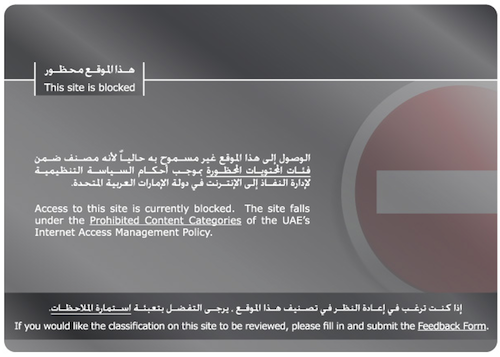
I had a conversation with a blog reader, and he mentioned that one of the primary .XXX informational websites set up by the ICM Registry, About.XXX, is being blocked by the United Arab Emirates government. I don’t know if all .XXX sites are blocked, but he indicated that they are.

According to the landing page that is seen when a visitor in the UAE types in About.XXX:

Access to this site is currently blocked. The site falls under the Prohibited Content Categories of the UAE’s Internet Access Management Policy.

This is something people speculated would happen en masse, and many thought this would be harmful to the .XXX extension and consequently, the domain owners who operate and invest in .XXX domain names. I, however, have a differing opinion.

I asked the person who sent the screenshot to do me a favor and visit a different domain name to see what exists on the site in the UAE. Not surprisingly, when he visited Playboy.COM, the same landing page was shown. The UAE blocks websites with adult content, whether they are on .XXX domain names or not.

If the UAE has blocked the entire .XXX extension via wildcard, I suppose it would be a problem for a company who owns and operates a non-adult website on a .XXX domain name. However, I can’t really imagine a non-adult website operating on a .XXX domain name. Also, it’s very likely any adult website would be blocked regardless of the extension due to the government’s regulations, so it’s not endemic to one particular domain extension.

I Disagree With Sedo’s Observation

15

I read a press release from Sedo today about the company’s recently launched Internet Domain Name Index (IDNX), and I disagree with one of the observations that was made.

According to the press release:

The bigger the better. The .com extension, which targets the entire world, has outperformed regional champions. Even successful country-code Top Level Domains (ccTLDs) like .co.uk and .de have not kept pace with .com since 2008. This casts some doubt on the viability of new regional TLDs that have been proposed, such as .nyc (for New York City).

My issue is that I don’t think a new gTLD, especially regional gTLDs like .NYC or .PARIS, will need to keep pace with .com to be viable. I happen to think that with a local marketing campaign, awareness efforts, and some development by local businesses, people in New York City will know about .NYC, and local businesses will purchase .NYC domain names.

As a result of these efforts, the gTLDs will be purchased locally, and while they certainly won’t sell at the same pace of .com, they will sell. From my perspective, they don’t have to sell nearly at the same clip as .com to be considered successful, let alone viable. With the right price structure and smart management, many niche gTLDs can be not only viable, but also profitable.

Antony Van Couvering is CEO at Top Level Domain Holdings, the company that operates gTLD consulting firm,  Minds & Machines, and he is also CEO of dotNYC, a group that hopes to win the rights to manage .NYC. I reached out to Antony Van Couvering for his feedback on the viability of niche gTLDs in light of the press release.

Sedo makes some good points, about management, about “me-too” not working, and so on. Conceptually, though, it’s hard for people to escape the .com model in measuring success — that measure being naked volume of names under management. Obviously .com is successful, and its enormous volume makes it so, and I agree with Sedo that it will be along time, if ever, before it is surpassed on that score. But to say that “this casts some doubt on the viability of new regional TLDs” is like saying that Apple can never succeed because Microsoft is so entrenched, or that Armani is doomed because Wal-Mart is so big.

The point is often made that that not all success is monetary, and .cat and other “public service” TLDs are brought into evidence. Even from a financial point of view, however, a small TLD can do very well. If .CPA is sold to certified public accountants at $200/yr, it doesn’t take many to join before that’s a great business, especially with a better cost structure than incumbent registries have.

In the United States, .com is habitual (which is not the case in the rest of the world). New gTLDs in general will break that habit, because people will begin to ask themselves, “what’s the extension.” Once that happens, people will begin to examine the extension on its merits, instead of just relying on .com as a universal. Once any one of these new gTLDs, because of great marketing, a compelling bundled application, or some method, challenges the “habit” of Americans to just type .com after a name, the game is wide open, and people will begin to look at the meaning and use of .com instead of just its ubiquity.

I welcome your thoughts on this topic.

How Many .XXX Landrush Applications Will Be Made?

1

At the conclusion of the sunrise period for reserving .XXX domain names, the ICM Registry reported that they received over 80,000 applications. In order to apply in the sunrise period, an applicant needed a trademark and about $200 (per domain name).

The .XXX landrush, which began on November 8, is less restrictive and may be less expensive. Applicants don’t need a trademark, and the application fee plus registration fee is generally less than $200. The application fee is non-refundable, and if more than one application is received, the domain name will go to auction.

The major difference between the landrush and Sunrise B is that landrush applicants can use their .XXX domain names, while Sunrise B allowed applicants to prevent their trademarks from being used by anyone.

I think it will be very interesting to see how many landrush applications are received. In my opinion, the non-refundable application fee may be a  deterrent, since that is a sunk cost whether you are the winner or not. If you’re paying an average of $75 per application, it’s going to cost $750 just to have a chance to get 10 names. With Sunrise B, even if an applicant shared a trademark with another company or organization, the applicant would be just as happy if the application was awarded to another party, since that would mean the name wouldn’t be used.

All that said, I am curious about how many landrush applications you think the ICM Registry will receive. The landrush period ends on November 25.