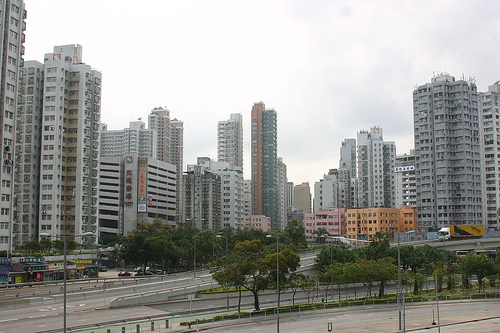


Additional Hong Kong Domains for Sale

Over the last month or so, I’ve sold two Hong Kong geographic domain names, WanChai.com and KwunTong.com, and I still have a few other domain names remaining. Instead of creating individual posts for each, I am going to save time by listing them for sale here.

Judging by the 2 emails and DNForum private message I received in the week after selling WanChai.com in which the writers told me they wish they bought it first, you should probably be quick if you would like to purchase one or more of the names below. If all three are of interest, I would consider an offer for the three domain names. Post “sold” in the comment section of the blog if you’re interested.

HK

YuenLong.com – Price: $6,500 US Dollars

References:

  • Go2YL.com – “Yuen Long has quite a lot to offer.” “The district is renowned for its rich cultural heritage and abundance of antiquities and monuments. Many traditional ceremonies and rituals are still observed by the people in Yuen Long, in spite of the coming of modernity of Yuen Long. Examples are Tin Hau Festival, Tai P’ing Ch’ing Ch’iao and basin meal.”
  • CNNgo.com – Why We Love Yuen LongDirt biking, strawberry picking and traditional basin meals are just some of the reasons why the rest of Hong Kong loses to Yuen Long
  • Wikipedia – “It had a population of 449,070 in 2001

Hong Kong

TaiPo.com – Price: $5,500 US Dollars

References:

  • Sam’s Exotic Photos of Tai Po – “Tai Po used to be a modest village town with historical relics and charming scenery. Now, it has been transformed into a thriving and prosperous new town. It is a marvel that the tranquility of its traditional villages have been preserved and coexist in harmony with the high-rise buildings of the bustling new town.
  • Tai Po Football Club (Wikipedia) – “On 6 June 2009, Tai Po won 4:2 against TSW Pegasus, in front of 4,042 fans at the Hong Kong Stadium, to lift the Hong Kong FA Cup, marking the first time a district team has won the trophy.”
  • Wikipedia – “It had a population of 310,879 in 2001.

Tsuen Wan, Hong Kong

TsuenWan.com – Price: $7,000 US Dollars

References:

=====================

Photo credits:

EverythingEverywhere.com Domain Sale Isn’t So Bad

Earlier today, I wrote about the re-branding of T-Mobile and Orange into a new company called Everything Everywhere. I mentioned that the company also acquired the domain name EverythingEverywhere.com in private, and The Register had a story in which the domain owner revealed that the domain name was sold in private (for a “nominal sum”) via Sedo just before the news was announced.

Owen Frager had an article about the sale, laying the blame squarely on Sedo doorstep, “Sedo Throws Domainers Under the Bus,” and I don’t agree with this at all. Sedo doesn’t and shouldn’t personally interact with all buyers and sellers. In fact, I can’t remember one completed purchase or sale that I’ve been involved with that had a Sedo account representative involved during the negotiation process.

With hundreds of domain sales a month, it wouldn’t make sense for Sedo to monitor all domain negotiations. I could understand the anger if they misrepresented who the buyer was, but if an agent acted on behalf of the buyer, Sedo would have no reason to know if it was a huge conglomerate or a mom and pop shop. Likewise, if the buyer and seller negotiated using Sedo’s automated system, there would be no reason for a Sedo representative to be involved.

As badly as the former domain owner must feel about possibly leaving money on the table, I think he needs to take a step back and realize that he got the price he wanted. Someone else may have wanted more and possibly gotten it, but it is what it is.   The former owner probably bought it for registration fee, and if he sold it for a few hundred dollars, it’s more than he had before.

This reminds me of the ChatRoulette.com sale where people commented about the “poor guy” who sold the name to Adam Strong for under $1,500 only to see it sell for $151,000. At least in this case, there will be no further sale of the domain name, so the money left on the table is all imaginary and doesn’t exist.

Congrats to the former owner for thinking of and buying a great domain name. There are plenty of people in the advertising and marketing business who would love to know their idea for a big brand was used.

For the future, domain owners may want to consider checking other extensions to see what companies own those and may give an indication of who would want the .com.   Interestingly, EverythingEverywhere.net was owned by Buy Domains as late as March 23, 2010 before Melbourne IT bought it.

Offer a Payment Plan to Close Domain Deal

I don’t necessarily like it when a buyer stretches out payments for a domain name, but offering it can be a smart move. I recently sold a domain name, and during negotiations, the buyer indicated that funds were a bit tight at the moment, but he wanted to buy the domain name. To keep the negotiation opened and to ensure that I was able to get my asking price, I offered him a payment plan, and we were able to come to an agreement.

Here’s what I recommend if you offer a payment plan or are asked to offer one:

  • Consider using an escrow service that Moniker offers or Escrow.com offers (need to contact them directly) to ensure both parties live up to their end of agreement with an impartial company acting as an intermediary.
  • Domain owner should keep possession of the domain name (or see above) until final payment is made. Owner can change DNS if necessary and asked.
  • Make sure everything is in writing so buyer and seller have the same expectations. I recommend having a domain attorney write the agreement, especially if it involves a considerable sum of money.
  • Be clear on what happens if buyer stops paying. In my opinion, the domain owner should keep all previous payments and the domain name.

Tip for Buying Good Names to Resell

Once in a while, I will have a domain buyer who has a specific type of interest. Generally, this comes from a domain sale I made to an end user, and obviously the end user wouldn’t be interested in random other domain names, no matter how great they are.

If you present this buyer with other good names of similar quality to the name he bought, there’s a chance he might buy others. The problem always becomes finding good domain names that are of the same quality. Here’s a tip I can share with you to give you an idea of what I do.

I search for other websites in that industry/vertical, and I find the websites with the best navigation. I then find the keywords that are used for products and services on those websites, noting those that are used most.   Once I have a list (or while still searching through the list), I do both GAKT searches as well as standard Google searches to see the frequency of searches and the number of companies advertising those different terms I’ve found.

Once I have a list of domain names that I think would be valuable, I come up with a sales price in my mind. This may be the hardest part, but I place a hypothetical bottom price I think each domain name could yield to this buyer or to others. I then begin the process of contacting the owners and/or seeing if the domain names are already for sale, and I make offers based on what I think I can get for the domain name.

There are two things you need to be cautious about:

1) The buyer won’t want additional domain names even if they’re of similar quality. You’ll still be able to pitch the name(s) to others, but end user sales aren’t always easy, and it might be tough to flip specific names to domain investors.

2) You obviously need to be realistic with your price, and lowballing to get a name at your necessary level of profit margin generally isn’t a good idea, unless it’s not owned by an end user. Keep in mind that if the name is owned by an end user already and you do make a lowball that’s accepted, it should tell you something about the domain name!

Latonas One Day Auctions Bringing Quick Liquidity to Market

Over the past couple of weeks, Rick Latona’s team at Latonas.com has had a series of one day domain auctions, with all but two auctions having all domain names listed at $1.00 reserve prices. When a seller opts to list 50+ domain names in a single auction with basically no reserve price, they must have confidence in the venue. If interested buyers aren’t present or a technical glitch prevents people from bidding, it can end in disaster for the seller.

So far, the people who have held auctions at Latonas.com – and Latona’s company itself – have all made out fairly well with their auctions, netting well over a quarter of a million in sales. Here are the auction totals so far:

  • House Auction: $132k
  • House Auction: $19k
  • Richard Whitney auction: $46k
  • .MX auction: $3k
  • $1,000 House auction: $93k
  • Edwin Hayward auction: $27k
  • Eddie Sherman auction: $8.5k

I think Snapnames is the only other auction venue that allows private domain investors to hold personal auctions on its own proprietary platform (Bido may, although I am not 100% positive). The major difference though is that Latonas.com only has one auction during that day, so all of the marketing focus is on the one single auction.

Today, Domain Capital is holding an auction, with the prize domain name being Dolares.com (meaning dollars in Spanish). The auction already has over 40 bids and a price of $2,000 with just a few hours remaining. There are a few other good names in the auction, but with a fairly small auction like this, the best name stands out even more for people to bid.

Will Rick be able to build off of this great momentum? Only time will tell, but there are a number of companies out there with sizable portfolios who would love to drive 5 figures in revenue in a single day, and there are plenty of people out there looking for good deals to keep the sales prices honest.

Things to Look for When Finding End User Buyers

I’ve discussed at length methods I’ve used to sell domain names to end users. Sometimes my efforts are successful and pay off, and other times, they do not. Here are a few things I’ve learned which may help you the next time you try and sell a great domain name to an end user buyer:

Many competing companies: In industries where there is a lot of competition, having a good domain name can make a company stand out from its peers. Whether it’s because of the SEO or because the company wants to “own the brand,” there will always be at least one company that wants the category defining domain name, even if the category is somewhat small. As long as there are many competitors, at least one company will want your exact match keyword .com domain name.

Small and large companies within target: I have found that there should be a good mix of small and large companies in a vertical to best sell a non-ultra premium, but category defining, domain name.   It’s difficult to get to the decision maker with a huge corporation, but it’s quicker with smaller companies – especially when it comes to decision making.   Boiled down, it would be tough to sell a soda domain name when you are only pitching Coke, Pepsi, Dr. Pepper…etc rather than an industry with a mix of companies.

Generic domain names are owned by companies: One thing I noticed when I made the successful end user sale I wrote about was that many of these companies didn’t use their brand names in their website urls. They used descriptive terms such as their area + their industry. When I saw that and had an industry keyword, I knew at least one company would want it, and I was right.

Companies selling that product or service: If you have the exact match domain name of a product or service, it’s likely one of the companies would want to buy it. Although a lot of companies aren’t completely knowledgeable about SEO and/or Internet marketing, many will recognize that this particular type of name would have value to them. It’s your job to convince them of this.

High profit margin on product or service: Similar to above, if that product or service is profitable, it’s more likely they will be interested in the domain name. If a company makes $1 profit per customer and they don’t sell many of these products (and it isn’t considered a loss leader) they probably won’t (or can’t afford to) spend a lot of money for the related domain name. If a new customer will net them big bucks, they can and will be able to justify a higher expenditure.

Own the same domain name in another extension: If a company owns the exact same domain name as you, just in a subpar extension (.net, .info maybe .org), it’s likely they would have wanted the .com if they could have bought it. Maybe the .com wasn’t for sale and the company didn’t know how to inquire about it or maybe they couldn’t afford the .com in the aftermarket when they bought the other extension. Whatever the case is, you know they like this term, and will probably want the .com. Just be cautious if the other extension is developed and there is a potential that the term isn’t generic enough. They may use your solicitation email as a sign of bad faith in a UDRP proceeding.

What else do you look for when selling domain names to end users?