

Create Escrow.com Sale Buttons

There are a number of people who use for sale landing pages on their domain names. Typically, these landing pages have some sort of large “for sale” notice along with information about how to complete the transaction. I just learned that you can create a button at Escrow.com that will automatically set up a transaction when it’s clicked.

I know there are plenty of people who use Paypal for this, but in my opinion, when dealing with buyers you don’t know, especially on higher value sales, it’s better to use an intermediary like Escrow.com. By having a button on your landing page, you can probably eliminate negotiations, don’t have to pay an aftermarket commission for a sale, and you can lock in deals with a counter party that is registered at Escrow.com.

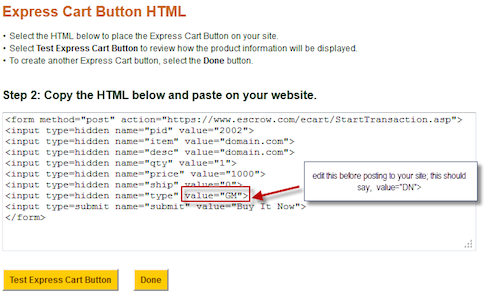
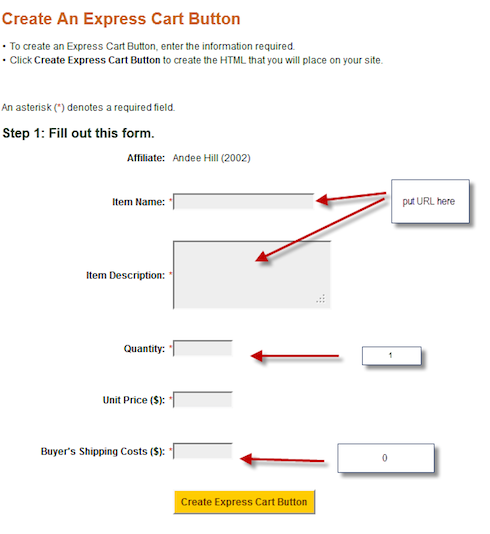
To create buy it now buttons, you will need to register as a partner at ecart.escrow.com. This will create a partner ID for you and enable you to create what the company calls Express Cart Buttons. The buttons were designed for General Merchandise but work fine as long as you change the GM to DN, as you can see in the example below.

There is some pre qualifying required in order to use the buttons. Contact the Escrow.com sales department to get access to them.

Why I Don’t Price Domain Names in End User Sales Emails

24

One thing you’ll notice in the end user email I shared is that I don’t tend to list the sales price in my emails. It’s not an omission, and I want to share why I tend to leave the price out when I am trying to sell a domain name to an end user buyer.

When I am looking to sell a domain name, I have generally done my due diligence to know what the domain name is likely worth in optimal conditions, what it is worth for a quick sale, and what it’s worth if I want to dump the name quickly. Clearly, I want to sell the domain name for its optimal value, but there are reasons why I might take a lower offer.

When you price a domain name in an email, you may automatically eliminate every single potential buyer who thinks the price is too high.  If potential buyers do not reply, I can’t negotiate with them to close a fair deal. Unless I decide to re-contact the same people, which I would not do, I would never know whether any of those prospects would have an interest at a lower price.

When people reply to my emails asking for the price, I know they are interested in buying one of my domain names. If it’s a matter of price, and they are reasonable about the valuation, there’s a chance we could bridge the gap and close a deal. There’s also a chance we could potentially work out a lease, financing, or some other type of mutually beneficial deal.

Not pricing my domain names in an email opens the door to communications with several parties, and when there are multiple parties interested in buying a domain name, it makes selling for an optimal price easier.

I’d be interested in hearing your thoughts and experience with pricing or not pricing.

Website Badges Are Helpful

Rick Schwartz announced that he had website badge graphics made for TRAFFIC Award winners, and based on my personal experience, I think it’s a smart idea that you can replicate if you operate a website.

Naturally, when someone sees a badge, they want to learn more about what it means and will investigate.  Having branded badges appear on another website helps build awareness for your site, can bring traffic, and can increase your business. There is also the possibility of search engine benefits with the links as well.

When a company signs up for a listing on DogWalker.com or a new park is added to DogPark.com, I send a badge graphic in the welcome email. I give the recipient an option to either upload and post the graphic, or they can grab the code I include in the email to add to their website. Many people find it easier to use the code, which I can customize with proper title and anchor text.

A number of dog walking services and dog parks use the badge on their website, which you can see in action here:

I don’t know how many sign ups have come as a result of the badges, but  if they make the recipient feel special and proud to display them, it can help your brand.

Don’t Think Like a Domain Investor

The director of my marketing program always reminded us that we needed to think like consumers and not marketers. It makes sense because the goal of marketers is to generate revenue from consumers, and if you aren’t thinking like a consumer, you probably won’t make the wisest business decisions.

One of the things that guides my decision making process when it comes to domain acquisitions and sales is the ability to put myself in the position of a counter party. I think about whether a particular domain name makes sense for a company in the industry, and I also think whether the price would make sense to the buyer or seller.

I’ve sold domain names in many different industries. I have zero experience in many of those industries, but I was able to get a cursory perspective when acquiring and then selling domain names. I did my best to put myself in the position of the person that would be buying the domain name from me, in order to give them a value proposition they would understand.

This morning, someone commented “I never use domains like “auto.com”, “shoes.com”, “wine.com”, etc. Never have. never plan to. Do not know ANYONE who does.  I never use those bland domains because I know that domain will not have the information, the item, the price, the shipping, the service that I am looking for.”

There are many things I personally do not do, but I know that just because I don’t do them it doesn’t mean others don’t either. When you are buying and selling domain names, you need to think like the people who will ultimately buy the domain names from you. If you can show them why they need your domain name to improve their business, they will buy it if the price is right.

Think like your target audience and not like a domain investor.

Be Mindful of the CAN SPAM Act

Last week, I posted an article that shared an email I send to potential buyers of my domain names. The purpose was to give readers an idea about what to write when contacting potential buyers, but there wasn’t information about email protocol, aside from the marketing advice.

A commenter that goes by unknowndomainer made a comment about the CAN SPAM Act, and I think it’s important enough to highlight in a separate article.

According to Wikipedia, “The CAN-SPAM Act of 2003 (15 U.S.C. 7701, et seq., Public Law No. 108-187, was S.877 of the 108th United States Congress), signed into law by President George W. Bush on December 16, 2003, establishes the United States’ first national standards for the sending of commercial e-mail and requires the Federal Trade Commission (FTC) to enforce its provisions.”

People in the US who send commercial emails must abide by this Act or face potential financial penalties. If you are in the US, or if you are sending emails to US-based businesses, I think it’s very important for you to read up on the CAN SPAM Act and be knowledgeable about what you can and cannot do when sending emails.

For me, I generally add a line at the bottom of the email to let the recipient know that it’s a one time hand-sent email and that they weren’t added to any mailing list. In addition, I generally include my company’s mailing address as well, to ensure compliance with the Act.

I am not a lawyer and can’t advise on who needs to abide by the Act or what exactly needs to be included to prevent violations, but you should know about the Act and know what’s in it before you send out emails.

Updated End User Sales Email

I am always tweaking the emails I individually send to end users, and I want to share the latest iteration. Please keep in mind that I individually send these emails to hand selected recipients who I think would be good prospects for the acquisition. It’s similar to what I do when I want to buy a domain name.

There are a few things to note:

  • I try to address the email to the person receiving it (no “Hi,” but “Hi John”).
  • I include a link to my website so they can see who I am and that it’s not a scam.
  • I add some urgency with the mention of the auction  possibility.
  • I don’t list the price so I can receive offers and open a dialog
  • Subject is usually [DomainName – Opportunity] or along those lines.

Let me know what you think of the email and if you would change anything.

Update: For the sake of this post, I am discussing the marketing side of selling a domain name rather than the legal aspect of sending emails. I am not an attorney and can’t advise you on legal issues, like the CAN SPAM ACT in the US, or any other legal issue related to sending email in any jurisdiction.