



Subscribe

Why I Don’t Buy Using Revenue Multiples

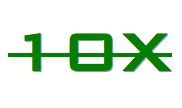
Revenue MultiplesI know a number of companies and individuals that have spent a lot of money buying domain names based strictly on revenue multiples, and there are many reasons why I think this is a bad idea. I personally have never bought a name strictly based on the amount of money it generates because of the reasons I outline below. I am sure there are plenty of people who have done well buying on multiples, with the “industry standard” previously being 10 years, but I strongly believe much more money has been spent on bad buys than good ones.

1) PPC will probably continue to decline. A 10 year multiple last year is probably a 14-18 year multiple this year – if not more.

2) Revenue might be seasonal, so if you buy a winter-related domain name in the spring, the last few months of revenue will be strong, but it’s probably not indicitive of how the domain name will perform year-round. If a seasonal domain name is bought on a 10 year multiple, when you consider it could be most active just 25% of the year, the actual multiple could be 40 years rather than 10.

3) A domain name may have been a developed website before it was parked. As time goes on, the site will presumably steadily lose traffic as search engine links disappear, and the money won’t continue to be generated as strongly.

4) A developed website that generates revenue will have costs associated with that revenue, including inventory, hosting, fulfillment, website design/updates, and the time it takes manage. An affiliate-based website will have less upkeep, but there are still management issues that take time and effort.

Sure, if a generic domain name is making money, I will take the revenue into consideration and probably pay what would be a greater multiple than whatever the industry standard is. However, I don’t like the idea of buying a domain name simply based on the revenue it is generating in its current form. In my opinion, there are too many risks to buying domain names based on a revenue multiple, whatever that multiple may be. It’s too difficult to evaluate domain name values based on a fixed strategy like revenue multiples.

** I am out of town for the weekend, so comments may take extra time to be approved, and questions may go unanswered for a bit – but I will get to them of course **

Follow Up: Make 1,000% Profit

I want to follow-up to a post I wrote a few weeks ago called “Make 1,000% Profit.” In the article, I discussed how people can analyze what names are selling at auction at Snapnames, buy names for registration fee at Moniker, and then sell them on Snapnames. The jist was that you can register a domain name for around $8.00 and sell it for $80 (give or take depending on your starting price), for a 1,000% profit.

Since I posted that article, I went out and attempted to do what I had been doing, with then intention of writing up my results here. I had done what I mentioned a few times, and I wanted to prove that it is still possible, even after I publicly wrote up what I was doing.

In any event, the results aren’t as good as the title of my article, but as you will see, I am clearly still more than happy.

Names Registered: 204
Total Spent: $1,550.40

Names Sold: 91
Net Revenue (minus sales commission): $5,849

Total Profit: $4,298.60

All in all, I earned about 3x my investment in profit, and I have over 110 domain names left to sell. One thing that surprised me is that some of the names I bought actually get traffic and some are earning PPC revenue. I suppose with domain tasting being eliminated there are more opportunities to buy names that get random bits of small traffic, but I was surprised. We aren’t talking about a lot of money, but a little bit is more than nothing and shows that there is a value to these names and the buyer presumably knows this.

All in all, I think the test was successful, and I am very happy to have made over $4,000 in profit on this. I still have several months to go to sell the rest of the domain names, but any additional sales is just gravy.

As I said in my initial post as a caveat, it’s important to be able to distinguish a similar domain name to what is selling, and you need to be able to determine someone’s (or many peoples’) buying habits to be successful at this. If you are going to try and do this, I recommend starting small and scaling.

I am sure some people will criticize me because it’s not 1,000% profit as billed. However, I am not selling anything and not making any money from anything you sell, so there’s really no reason for criticism. The first time I did this, the profit margin was greater because some of the auctions had mutliple bidders, driving the price (and profit) higher.

***

Just as a “head’s up” I am leaving for a long weekend in Atlanta later on today, so comment approvals may be a bit slower than normal.

Can You Scale Your Business Model?

ScaleWhen I was at AIG, one of the most frequent questions, aside from “what’s the projected ROI on that program?” was “can you scale the program?” If we could do a small test that was successful, it would only be great if we could scale up and have the same success on a greater level. It just wasn’t worth the time and effort doing a particular program if the potential revenue was limited.

I’ve asked the same question about my domain investments, and that is why I have chosen to focus on development. While domain sales is still fairly lucrative, I don’t think it is still considerably scalable to a degree where it will drive constant growing revenue at a multiple of what it is now. I still believe I can do what I do to generate revenue for the foreseeable future, but I don’t think it’s feasible to greatly scale this business model at this point in time.

With domain development, I believe I can scale. On Burbank.com, Lowell.com and Newburyport.com, I can either keep them as tourism-heavy websites with information about the city, or I can follow Shaun Pilfold’s model on Kelowna.com and become the source of information for my respective cities. Yes, it costs money to scale and I am not ready to make the financial and time commitment yet with my sites, but it is possible to scale in that manner.

Likewise, my mini site building strategy is also scalable. Perhaps it’s not easily scalable if I continue to build them on my own because of the time constraints, but there are great development companies that focus on mini site-type websites like AEIOU.com, WannaDevelop.com, and MiniSites.com that offer a variety of services. Building mini sites is scalable, and the more you build, the better the deals you can make with all of the mini site and development companies.

A couple of dollars a day per mini site doesn’t generate a lot of revenue if I were to look at each site individually, but if I have 100 mini sites that make $2.00 a day, that’s over $50k per year, with very little maintenance. Some websites will make less than $2.00 and some will make significantly more, but you get the picture. If you build websites on strong keyword domain names, you are generally going to drive revenue while adding value to your domain names.

The point of this is that you need to determine if what you are doing is scalable and sustainable. Experiment with different things like I am doing and make sure you can scale if it works.

Lots of Domain Buyers

I know what Ron’s numbers are telling him (and us), and I know that many domain investors at all levels are publicly and privately saying that there aren’t many buyers (on the investment side) out there right now. However, I think there are still plenty of buyers out there, but it just takes extra effort to find them these days, and your pricing has to be reasonable.

Here are a two suggestions on how to find buyers right now:

Contact some of the new owners of domain names that recently sold (listed on DNJournal) if you have similar domain names. Distinguish between end users who bought a name because it matched their corporate branding from those who were buying to enhance their company’s online presence, and from those who are investing in domain names. Each type of buyer has different needs, and you need to be able to tell what their needs are before you contact them, otherwise they will simply delete your email.

Follow along with what is selling at the auction houses – even the inexpensive purchases – and contact those buyers as well. Send them similar names that you own and price your names reasonably. Remember, if you are contacting them with names that you’d like to sell, you should name your price upfront. You might make less profit per domain name this way, but if you sell a small portfolio of names, you will increase your profits, despite a tighter profit margin.

I have been finding that there are less buyers in the $10-100k range right now unless you are giving really great prices on your domain names. However, it seems that people are still buying less expensive domain names, which can still be highly profitable. Buy smart and sell smart.

On a side note, I plan to discuss my experience with Snapnames outlined in my post, “Make a 1,000% Profit.” I am leaning towards keeping it in the newsletter, so sign up if you’re interested. (If you think the weekly/bi-weekly newsletter sucks, it’s easy to unsubscribe since I use Constant Contact). The results I have have been very strong, but I won’t write my summary until the funds have been wired.

Quick Tip to Buy Domains

When you are trying to buy a domain name and your offer is turned down, I recommend giving the owner one last opportunity to consider your offer, and add a time constraint to it to make him consider it quickly. Oftentimes when a person rejects your offer, it’s a tactic to increase the amount of your offer. If you specify that you won’t increase your offer and that you will give him a few days, he might realize that’s the best offer he will get from you and potentially change his mind.

When I was negotiating to buy Burbank.com, negotiations came to a head after a couple of weeks. I really wanted the name and had to increase my offer a couple of times. Finally when the offer was rejected, I replied that my previous offer was final and that I would move forward with another significant purchase if the owner didn’t change his mind over the weekend (it was a Friday afternoon).

Several hours later, the deal was verbally confirmed and all parties seemed happy. I don’t know whether the former owner was using his reply as a negotiation tactic or if he just didn’t want to sell until he realized that my offer would be off the table. However, putting a time constraint on a reply can get you a final answer.

Just don’t use this method if you made a lowball offer, because you will probably just get a snark reply   🙂

WordPress Errors or Theme Errors?

I was having a few problems on the back-end of my blog for a couple of weeks. I assumed it was because I recently updated my blog to WP 2.8, and although I was kicking myself for upgrading, there wasn’t much I could do. After a couple of weeks, I was faced with other random problems, and it began to get more than annoying.

After my designer was unable to access the admin panel of my blog, and I couldn’t even access it unless I was on my personal laptop, I began to worry. What if my laptop suddenly lost access, too, and I was blocked from my own blog. Fortunately, that didn’t happen, but I was lucky to have the help of Kevin Leto, who taught me a trick.

While I had assumed my problems stemmed from a faulty WordPress upgrade, Kevin wasn’t convinced. He had me go into the appearance section of the WordPress dashboard and select the default theme temporarily. Once I did so, all of the problems disappeared, allowing him to determine that the fault was in my current theme coding rather than WordPress.

Once Kevin isolated the problem, he was able to search through my files to find a really small error that was throwing off a lot of back-end functionality and he quickly rectified the error.

If you use WordPress and encounter problems and errors, switch it to the default theme and try to replicate your errors. If the errors disappear, the problem is in your theme – not in WordPress.